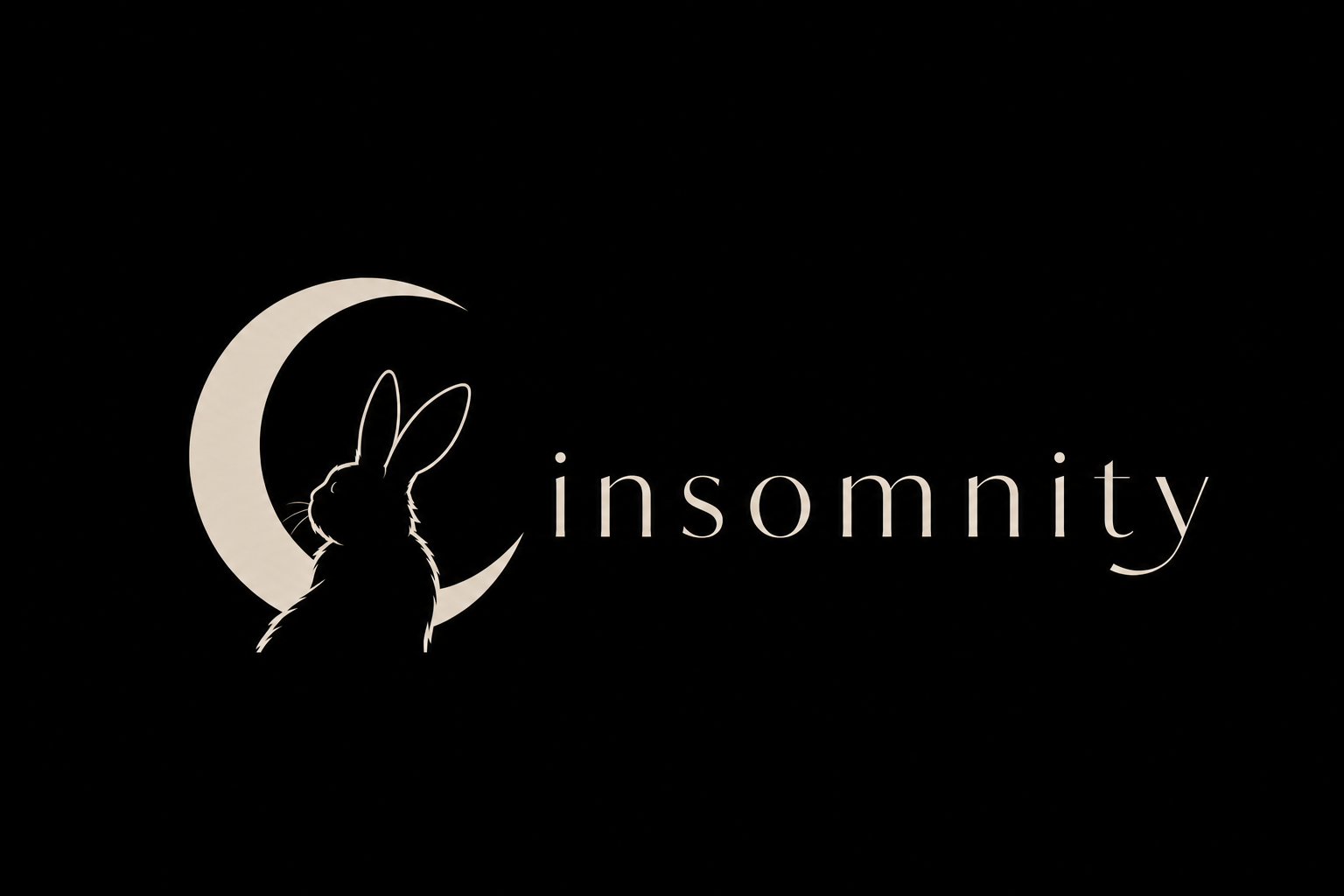
Yes, we have a new logo. And no, it wasn't designed by an AI that hallucinated a rabbit for no reason. There's actual thought behind this — layers of it, like a philosophical onion that smells considerably better than a regular onion.
Most logo reveals go something like: "We updated our visual identity to better reflect our values as we move into an exciting new chapter." This is never followed by any actual explanation of anything. We are not doing that. This post is the full breakdown — the rabbit, the crescent moon, what they mean together, and why any of this should matter to you at all. Stick around. It's worth it.
First: A Rabbit. Why a Rabbit?
Fair question. Out of every possible animal in the known universe — and by now we've found quite a few, since we're living in the age of James Webb — the choice landed on a rabbit. Specifically, a rabbit as a birth symbol from the Chinese zodiac.
In Chinese astrology, the Rabbit (兔, tù) is the fourth animal in the twelve-year zodiac cycle, sitting gracefully between the bold Tiger and the mighty Dragon. Those born under the Rabbit sign are known for their refined sensibility, quiet intelligence, and an almost instinctive talent for making others feel at ease. The Rabbit, in short, is the one in the room who isn't shouting — but somehow ends up being the most interesting person at the table.
The traits attributed to the Rabbit in Chinese tradition read like a fairly aspirational character sheet: vigilant, witty, quick-minded, and ingenious. The sign of the Rabbit is a symbol of longevity, peace, and prosperity in Chinese culture. Not bad credentials for something that spends a lot of time being quiet and observant.
But here's the part that makes it personal: the Rabbit as a zodiac birth symbol doesn't just describe a type of personality — it describes a way of moving through the world. Intelligent, cautious, and elusive, the Chinese zodiac Rabbit moves through life with subtle skill and calculated prudence. Realistic yet a pragmatic dreamer, they never linger where their well-being is at risk. Rather than facing storms head-on, they prefer to navigate around them with natural elegance, choosing the safest and least troublesome paths.
That last part — realistic yet a pragmatic dreamer — is doing a lot of heavy lifting. It describes someone who hasn't abandoned idealism but has learned to carry it practically. Someone who still believes in things, but checks the weather first.
There's also the famous origin story of how the Rabbit earned its place in the zodiac. When the Jade Emperor announced a great race across a wide celestial river to decide the twelve zodiac animals, the Rabbit quietly took stock of the situation. It knew it wasn't the strongest swimmer, nor the largest creature in the field. What it had was lightness, sharp eyes, and an ability to think on its feet. It watched the stronger animals fight the current directly, spotted stepping stones and floating logs midway across, and used them. It finished fourth — not by being the strongest or fastest, but by being the most observant. That's a different kind of intelligence, and arguably the more useful one.
The Rabbit is also, traditionally, remembered for its cleverness and composure during the legendary celestial race that determined the order of the zodiac animals. This symbolism connects the Rabbit with grace under pressure, intelligence, longevity, and careful timing.
Grace under pressure. Careful timing. Longevity. These aren't bad things to bake into a logo.
Then: The Crescent Moon. Because Of Course.
If the rabbit is the who, the crescent moon is the when — and the why.
The moon has been one of the most loaded symbols in human history, across virtually every culture that has ever looked up at the sky and wondered what was going on up there. The crescent specifically carries its own distinct weight: the crescent moon represents intuition, creativity, and new beginnings. Unlike the full moon's completeness, the crescent stirs a sense of mystery and possibility.
A crescent is a moon in transition. It's not fully revealed. It's not dark. It exists in the space between — and that liminal quality is precisely the point. Like the expanding crescent light, its associated energy exhibits ambitious curiosity, adventure, and an infectious zeal for life. It's a moon that's going somewhere. It hasn't arrived yet, but it's clearly on the way.
But the crescent moon in the Insomnity logo isn't just about aesthetics or vague cosmic vibes. It specifically represents the night — the time when the world is quiet and most people have signed off. The time when the group chat goes silent and the algorithmic content machine starts recommending increasingly strange things because it has no new signal to work with.
The night is when something interesting happens to the human brain. The world quiets down; external demands fall away; and the mind, somewhat freed from the tyranny of constant input, starts making connections it couldn't make during daylight hours. This isn't just poetic — it's neuroscience. Research published in Molecular Psychiatry and verified through direct cortical stimulation studies has confirmed a causal link between the brain's default mode network and creative thinking, with the network playing a role in generating novel and useful ideas through unexpected, synchronous activation of dispersed cortical networks. The default mode network — sometimes called the "resting brain" — activates most strongly precisely when external demands are removed. Quiet time. Night time. The hours when most people are asleep.
There's even research specifically on the creativity sweet spot at the edge of sleep. A study from NIH found that the sleep-onset period presents an ideal cocktail for creativity, as the brain precisely engages networks instrumental to creative idea generation and evaluation. It's not quite awake, not quite asleep — and in that narrow window, something loosens. Associations form that wouldn't form during the structured vigilance of daytime thinking.
This is where the name Insomnity comes from. Not insomnia as a diagnosis or a complaint — but as a state. The state of being awake when the world isn't, of having thoughts that don't stop just because the clock says they should. Creativity never sleeps is the philosophy behind the name, and the crescent moon is its symbol: the light that's there precisely when everything else has gone dark.
The Rabbit and the Moon Together: Two Symbols That Were Always Meant to Meet
Here's where it gets genuinely beautiful, and also slightly eerie in the best possible way: the rabbit and the moon are not just chosen symbols that happen to sit next to each other in the logo. In Chinese mythology, they were always the same symbol.
The Jade Rabbit (玉兔, Yùtù) is one of the most enduring figures in Chinese folklore. Revered as a companion of the Moon goddess Chang'e, the Jade Rabbit symbolizes purity, selflessness, and immortality. The Moon itself is a central theme in Chinese folklore, representing beauty, longing, and the cyclical nature of life.
The origin story is worth telling in full. The Jade Emperor — think of him as the most powerful administrator in the entire cosmos, essentially Nick Fury if Nick Fury had been running things for ten thousand years — disguised himself as a poor, starving old man and begged for food from various animals. The monkey brought fruit. The fox brought fish. The rabbit had nothing to give. Wanting to help, it leapt into the fire to offer itself. Moved by such sacrifice, the Jade Emperor saved the rabbit and placed it on the moon, where it became the companion of Chang'e, the moon goddess. To this day, it is said to pound herbs with a mortar and pestle, forever mixing the elixir of life.
A creature that gave everything it had — and was rewarded not with power or recognition, but with a permanent home on the moon, doing meaningful work for eternity. There's something quietly remarkable about that. The Jade Rabbit isn't famous for conquest or strength. It's famous for generosity and devotion and the kind of stubborn, unglamorous dedication to purpose that doesn't photograph well but matters enormously.
The connection was also astronomical, not just mythological. Ancient Chinese astronomers noted that the dark spots on the moon's surface resembled a rabbit. The Eastern Han scholar Zhang Heng, in his work Ling Xian (灵宪), described the moon as a "yin essence" that took the form of a rabbit. People looked at the moon for thousands of years and saw a rabbit already there. The two symbols share a home that predates the logo by about two millennia.
The rabbit and the moon were never separate. They found each other long before anyone designed anything around them.
What It All Means Together
Put it together and you have something that's greater than the sum of its parts — which is, in fairness, what a good symbol is supposed to do.
The rabbit is the birth symbol — specific, personal, grounded in human time. The crescent moon is the moment — the night, the quiet, the space where imagination runs without interruption. And their mythological union through the Jade Rabbit mythology binds them into a single idea: a creature of intelligence and patience, permanently residing in the one place that has always symbolised mystery, creativity, and the untameable human tendency to stay awake wondering about things.
The moon represents the subconscious mind, containing thoughts and feelings that may not always be fully visible. Artists and writers throughout history have found inspiration in the peaceful atmosphere created by moonlight, and the gentle light of the moon has become associated with reflection and introspection — a kind of quiet curiosity.
That quiet curiosity is the whole point. Not the grand proclamations or the loud ambitions. The small, persistent, unkillable urge to understand things — to turn an idea over in your mind at 2AM, to follow a thought down a corridor just to see where it goes, to write something down because it would bother you not to.
In Chinese astrology, the Rabbit is associated with yin energy, which represents femininity, intuition, and passivity. This yin quality explains why Rabbits are often seen as gentle, nurturing, and empathetic. The yin of the rabbit against the yin of the night — both gentle, both receptive, both oriented toward depth rather than noise. It's not a symbol that demands attention. It earns it.
The Hopeful Part (Yes, There Is One)
Logos are easy to overthink and harder to feel. The best ones do both — they carry meaning that survives being explained, meaning that doesn't evaporate once you know the reasoning behind it.
This one is trying to say something genuinely hopeful: that curiosity is its own kind of survival skill. That the people who stay awake thinking about things — not from anxiety, but from genuine interest in the world — are doing something valuable even when it doesn't look productive. That creativity isn't a career track or a brand identity, but something closer to a basic human trait: the need to make sense of things, to connect ideas, to notice what others missed because they were busy being sensible and going to bed on time.
The Jade Rabbit pounds its mortar and pestle on the moon forever, mixing an elixir of life for a goddess in a lunar palace, in a story that has survived two thousand years and made it all the way into a conversation between NASA mission control and the crew of Apollo 11. During Apollo 11 in 1969, NASA staff joked that the astronauts should watch for Chang'e and her moon rabbit — and Buzz Aldrin replied they'd "keep a close eye out for the bunny girl."
A 2,000-year-old Chinese myth, alive enough that astronauts on the first mission to land on the moon were joking about it on the radio. That's what a good symbol does. It doesn't expire.
The Insomnity rabbit is sitting in its crescent, quietly doing its thing, in the hours when most people have logged off. It's not trying to be the loudest thing in the room. It just refuses to stop being curious.
Honestly, same.
The Insomnity logo was designed in-house. The symbolism was two thousand years in the making and one rabbit in the execution.