Every audiophile journey has a starting point. For some it's a gift. For others it's a forum post at 2AM that they deeply regret by the time the credit card statement arrives. Mine started with a silver aluminum brick that looked like it fell out of a laboratory — the xDuoo XD-05 Plus, one of the first units available in Indonesia when it launched, and still sitting on my desk to this day.
This is the first entry in what I'm calling the Gear Series — a running log of the actual equipment I use, why I chose it, and whether it still earns its spot after real, extended use. No PR units. No affiliate links. Just the gear.
What Is This Thing, Exactly?

The XD-05 Plus is a portable DAC and headphone amplifier — the kind of device that bridges your digital source (a laptop, phone, DAP, whatever) and your headphones. It handles the digital-to-analog conversion, then amplifies the result with enough authority to drive demanding headphones that your device's built-in output simply cannot.
"Portable" is used loosely here. xDuoo themselves categorise it as "transportable," which is the audiophile hobby's polite way of saying "it fits in a bag but you'll know it's there." It's a chunky 276g slab of CNC-milled aluminum with an OLED display, a satisfying volume wheel, three front-panel toggle switches, and the kind of build quality that makes it feel like it was machined for something more serious than listening to Spotify.
It's been through years of daily use at this point. Still going strong.
The Internals: Why This Chip Matters
The heart of the XD-05 Plus is the AKM AK4493EQ DAC chip — part of Asahi Kasei's Velvet Sound lineup, known for a smooth, detailed presentation with natural tonality. It's the same chip family used in considerably more expensive units. Pair that with the XMOS XU208 USB receiver chip handling asynchronous transfer, and you get clean, bit-perfect input up to 32-bit/384kHz PCM and native DSD256.
The full spec rundown:
| Spec | Value |
|---|---|
| DAC Chip | AKM AK4493EQ |
| USB Receiver | XMOS XU208 |
| PCM Support | Up to 32bit / 384kHz |
| DSD Support | Native DSD256 |
| Output Power | 1000mW @ 32Ω |
| Battery | 5000mAh Li-Polymer |
| Battery Life | ~13h (DAC+AMP) / ~40h (AMP only) |
| Inputs | USB-C (data), Optical, Coaxial, 3.5mm AUX |
| Charging | USB-C (separate port from data) |
| Weight | 276g |
The dual USB-C ports deserve a mention — one dedicated to data, one to charging. It sounds obvious but a lot of units in this class still use Micro-USB, which in 2024 is a choice I refuse to acknowledge as acceptable. The XD-05 Plus got this right from launch.
The 1000mW output at 32Ω sounds aggressive on paper — and it is. Three gain levels (Low, High, and a Boost mode) exist specifically because at maximum output this unit will make your ears file a formal complaint if you're not careful. For IEMs, Low gain is the only sane setting. For demanding planar headphones, you'll be glad Boost exists.
How It Sounds (Stock)
Out of the box with the default OPA1612 opamp, the XD-05 Plus is clean, neutral, and direct. It doesn't flatter the recording or smooth over rough edges — it presents what's in the signal and lets you deal with it. The soundstage is reasonably wide for a portable unit, though "intimate" is a more accurate description than "expansive." Imaging is precise. Bass has good control and texture without being emphasized.
The OPA1612 is an excellent stock choice — a professional-grade opamp with low noise and solid measured performance. On its own, it makes a strong case for the unit without spending another cent.
But then xDuoo went and put two DIP8 opamp sockets inside the case, accessible with a standard Phillips screwdriver, which is basically an open invitation. Reader, I accepted.
The Muses02 Upgrade: Where It Gets Personal
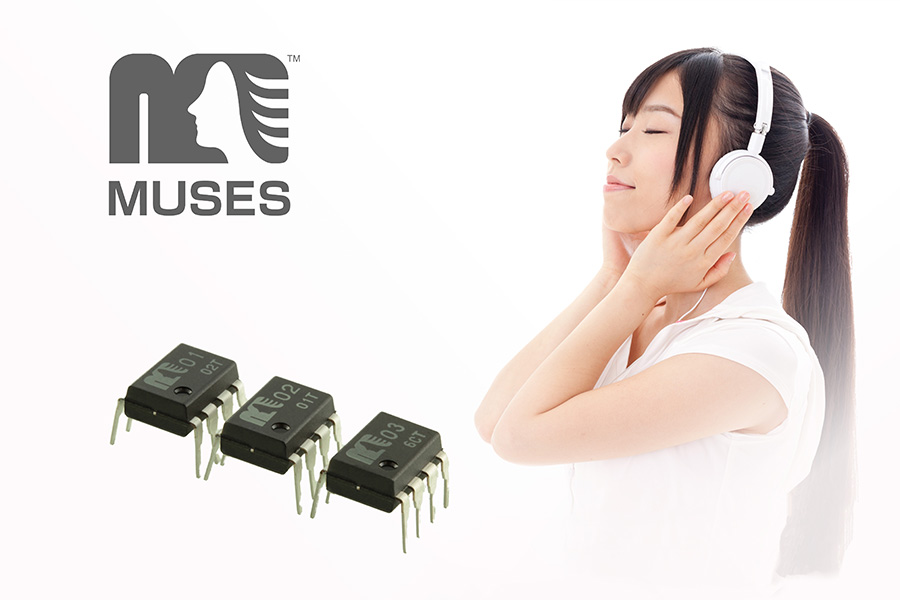
The Nisshinbo MUSES02 is a flagship audio opamp from Japan — bipolar input, dual circuit, DIP8 package, and priced at a level that makes you briefly reconsider whether a chip the size of a fingernail should cost that much. The answer, after living with it for a long time, is: yes, actually.
The Muses02 doesn't change what the DAC section does — the AK4493EQ is still handling digital conversion identically. What it changes is the analog gain stage: how the amplified signal is shaped before it reaches the output jack. The character shift from OPA1612 is real and consistent:
| OPA1612 (Stock) | Burson V5i | MUSES02 | |
|---|---|---|---|
| Character | Neutral, clinical | Forward, energetic | Smooth, analogue-feeling |
| Bass | Tight, controlled | Hits hard | Natural body, well-controlled |
| Mids | Clean, slightly dry | Thick, lush | Transparent, slightly warm |
| Highs | Extended, neutral | Smooth, slightly rolled | Detailed, non-fatiguing |
| Soundstage | Intimate | Wide and forward | Wide, with layering depth |
The Muses02 brings a sense of ease to the presentation. Listening fatigue drops noticeably on long sessions. Instrument separation feels more natural — things occupy distinct spaces rather than competing for the same layer. Whether that's "better" depends entirely on what you pair it with and what music you're running through it, but for my usual listening diet it's consistently been the right call.
Paired with the Tin HiFi T2 EVO — which is a bright-leaning IEM that rewards upstream warmth — the Muses02 balances the stack in a way the stock OPA1612 doesn't quite achieve. The combination ends up detailed and extended without being sharp. On the Audio-Technica ATH-M40x, which is already a flat and honest closed-back, the Muses02 adds just enough body to make long sessions comfortable without colouring the sound signature the M40x was designed to have.
If you own an XD-05 Plus and haven't tried opamp rolling, the Muses02 is the one I'd recommend starting with. Just be patient sourcing it — genuine units from authorised distributors are the only way to go. The counterfeit market for this chip is unfortunately real.
Living With It: The Honest Part
After years of daily use, here's what I've actually noticed:
The gain structure is the one genuine weak point. Low gain is almost too quiet for efficient IEMs; High gain is too loud. The jump between them is wider than it should be, and the volume wheel has a slight channel imbalance in the first few degrees of rotation. In practice this means IEM users live at a very specific spot on the dial. It's manageable, but it's not elegant.
The OLED display is genuinely useful. Input source, sample rate, gain level, and battery status are all visible at a glance. It's a small thing but after using units without displays, you notice and appreciate it.
Battery life is excellent. The 5000mAh cell delivers what's advertised — 13 hours of combined DAC+AMP use is real-world accurate. Forty hours in AMP-only mode (using the 3.5mm AUX input from an external source) is frankly absurd in the best way.
It can also be used USB-tethered as a desktop unit. Permanently connected to a laptop via USB-C for both power and data, it performs cleanly as a desktop DAC/AMP. The battery charges simultaneously. In this configuration it's been running at my desk for extended periods without issue.
The Bluetooth module situation is awkward. xDuoo sells the 05BL Pro as a Bluetooth add-on that clips to the back of the unit. It works, but it covers the charge port and adds bulk in a way that makes the word "portable" feel aspirational. I don't use it.
Should You Buy One in 2024?
The XD-05 Plus has technically been superseded — xDuoo has since released the XD-05 Plus2, XD-05 Bal, and the flagship XD-05 Pro. If you want the latest from xDuoo's transportable line, the Plus2 is the current generation equivalent.
But the original Plus is still available new or used at a lower price point, and it's a genuinely capable unit that holds up against the competition at its tier. If you find one at a reasonable price and want a versatile, hackable DAC/AMP that can grow with you through opamp experimentation — it's still a sound choice.
The Muses02 mod brings it up to a level that, in my experience comparing it against higher-end units at local community sessions, holds its own far past where its price suggests it should. The gap between this setup and something twice the price is real but narrower than the price difference implies.
That's where the value story gets interesting. And that's why it's still on my desk.
Next in the Gear Series: either the Tin HiFi T2 EVO or the Hidizs S9 Pro — haven't decided which gets written up first. We'll see.
Official links: